TL;DR
Google DeepMind says it is releasing two datasets, SatWeave and PARDIG, for building weather, hydrology and climate applications. The company says PARDIG improves hourly detection of light to moderate rain over IMERG-Final by more than 30%. Google DeepMind says it expects PARDIG to stay reliable even where ground measurements are missing.
- Number: Google DeepMind says PARDIG improves detection of light to moderate rain over IMERG-Final by more than 30%.
- Scale: Google DeepMind says PARDIG maps global rain at 15 minute steps and roughly 10 kilometer resolution.
- Timeframe: Google DeepMind's release includes PARDIG archives from 1999 to 2026 and a live feed.
- Access: Google DeepMind offers both datasets on Google Cloud Storage and PARDIG history in Google Earth Engine too.
- Limit: Google DeepMind says it ran the PARDIG evaluations itself, using radar networks and over 36,000 weather stations.
DeepMind opens the data behind WeatherNext 3
Google DeepMind announced two foundational datasets, SatWeave and PARDIG, aimed at the global community working on weather and climate. The company says both datasets are central to its recently released WeatherNext 3 model.
According to Google DeepMind, SatWeave is a global mosaic of satellite imagery giving the model a current look at forming clouds and storms. Google DeepMind says PARDIG is an AI based global rainfall dataset used in training that model's precipitation forecasts.
Google DeepMind is offering live feeds and historical archives of each dataset to researchers and developers for their own modeling.
SatWeave and PARDIG by the numbers
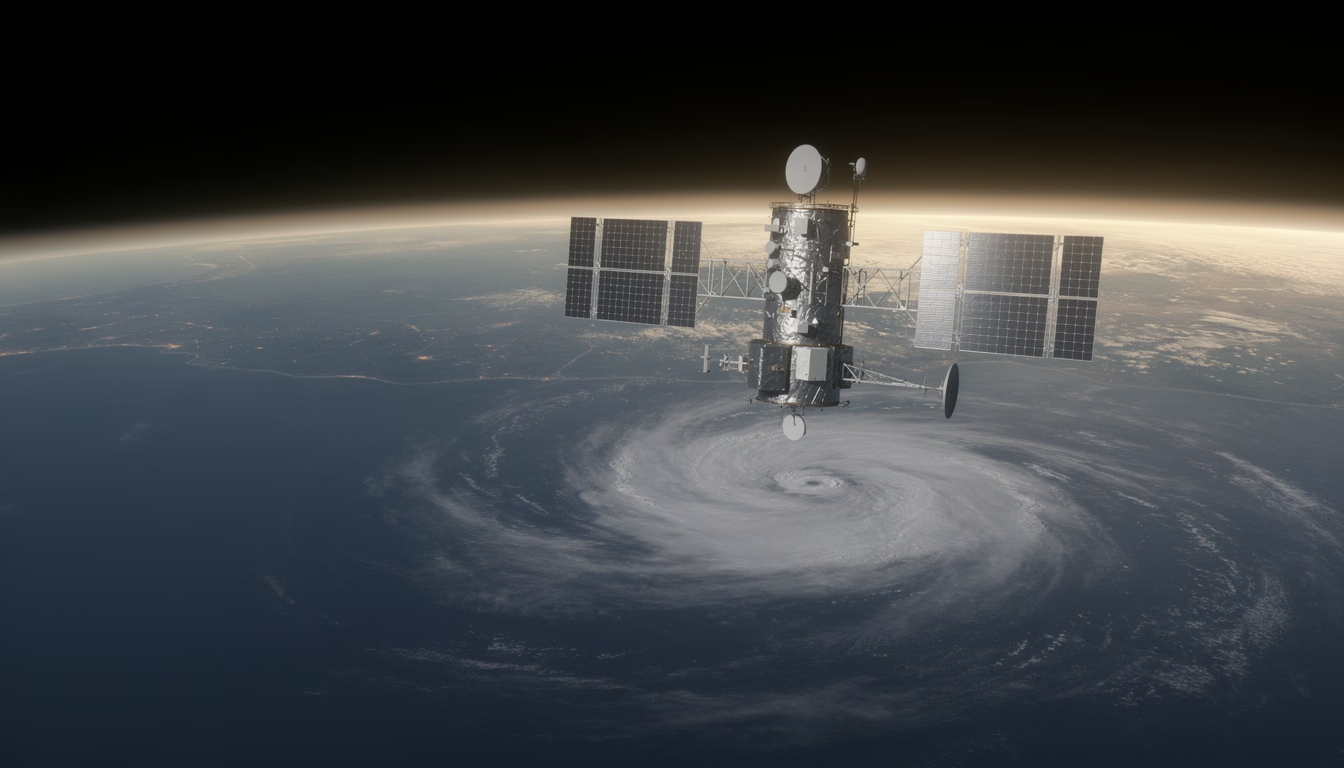
According to Google DeepMind, SatWeave combines imagery from five satellites that cover different parts of the globe. The company says the mosaic covers 17 channels across visible, water vapor and infrared bands.
Google DeepMind says SatWeave updates hourly, in contrast to models started from analysis data that refreshes every six hours. Google DeepMind says it is releasing that hourly live feed with an archive that covers over a decade.
Google DeepMind says PARDIG learns from sparse space radar observations of NASA's GPM Core Observatory, using SatWeave imagery and ECMWF atmospheric fields as inputs. Google DeepMind says the global rainfall map has 15 minute steps and roughly 10 kilometer resolution, with about five hours of average delay. Google DeepMind says the PARDIG history spans 1999 to 2026 and ships alongside the live feed.
Google DeepMind says it tested PARDIG against three continental radar networks in the US, Europe and Japan, plus over 36,000 weather stations worldwide. Google DeepMind reports that PARDIG beats leading global baselines at every analyzed rain rate, including NASA's IMERG-Final.
The company says PARDIG beats IMERG-Final by more than 30% in hourly detection skill for light to moderate rain. Google DeepMind adds that PARDIG captured extreme precipitation especially well, which existing global products find hard to detect.
Why open weather data matters to researchers
Google DeepMind says it wants the community to explore better models for floods, landslides and drought, especially where dense ground radar is missing. The company also names solar power and wildfire monitoring as uses it wants to explore with outside researchers and developers.
Google DeepMind calls the release the latest addition to its Earth AI portfolio. Google says its flagship weather model reaches users through Search, Gemini, Maps and Cloud, among other products.
In our reading, outside teams now hold some of the same inputs behind Google's own forecast model, which can make independent checks easier. Google's developer page separately lists WeatherNext forecast data on Google Cloud Storage, Earth Engine and BigQuery.
Open questions about SatWeave and PARDIG
Google DeepMind's figure caption refers to six geostationary satellites, which differs from the five named in its main text.
Google DeepMind frames reliable accuracy everywhere on Earth as an expectation, including in areas without ground measurements. The radar comparison relies on regions that have radar networks, so outside users will need to check PARDIG where radar is absent.
The PARDIG abstract on arXiv says WeatherNext 3 produces more skillful rain forecasts when trained on PARDIG, without stating the size of the gain. The arXiv abstract states a CC BY 4.0 license for PARDIG but is silent on usage terms for SatWeave.
Speculation, not a finding: open feeds could let outside groups test PARDIG against their own local observations.
Sources
- Google, Introducing WeatherNext 3, our most advanced and accurate global weather AI model (2026-09-03): https://blog.google/innovation-and-ai/models-and-research/google-deepmind/introducing-weathernext-3/
- Google for Developers, WeatherNext | Google for Developers: https://developers.google.com/weathernext
- arXiv.org, PARDIG: Global Precipitation Estimates Learned from Sparse Satellite Observations: https://arxiv.org/abs/2611.13941
- deepmind.google, PARDIG & SatWeave: Foundational Datasets for Earth Science , Google DeepMind (2026-11-13): https://deepmind.google/blog/opening-the-datasets-behind-our-ai-weather-models/