Skip to content
Mon, 23 Nov 202613:53:47 CET
AI-News

AI-News

Menu
  • Home
  • Basics
  • Posts
Searching...
No results found
  • Home
  • Science
  • DeepMind's AlphaGenome 2 predicts DNA effects in specific cell types
  • Science

DeepMind's AlphaGenome 2 predicts DNA effects in specific cell types

EditorialNovember 13, 20264 min read
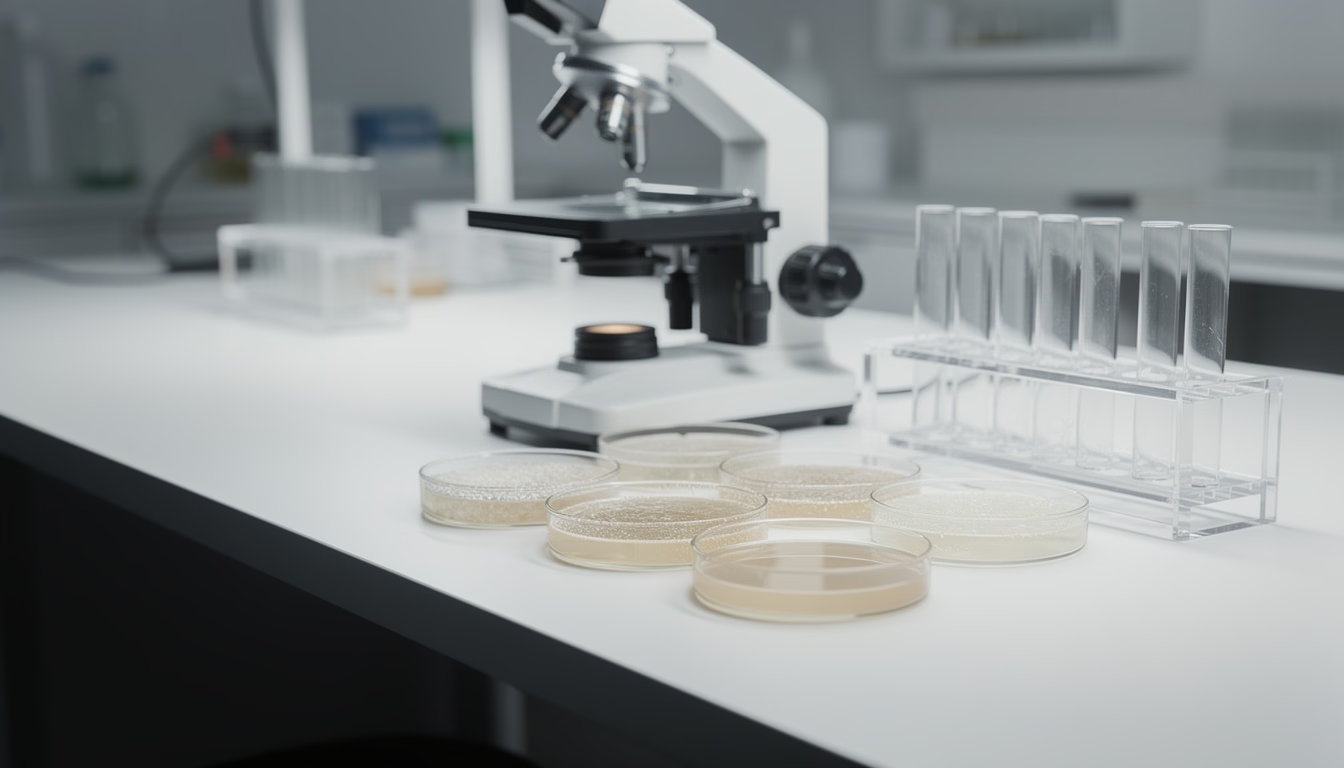
Petri dishes of cell cultures on a laboratory bench next to a microscope

Contents

  • TL;DR
  • DeepMind moves from tissue averages to cell types
  • A conditional design and the TenK10K results
  • What the results mean for disease research
  • Open questions on weights, accuracy and validation
  • Sources

TL;DR

Google DeepMind has released AlphaGenome 2, a model that predicts how DNA variants affect specific human cell types. DeepMind says AlphaGenome 2 reached 30% for causal variants on TenK10K, against 16% for the fine-tuned original model. It is open for noncommercial research through its API, with a private preview for commercial research.

  • Number: MarkTechPost reports the 30% figure was measured at 90% precision.
  • Scale: The company says it trained the model on more than 100 million cell profiles from 68 tissues.
  • Source: MarkTechPost notes the benchmark rows in its comparison are DeepMind's own evaluation.
  • Limit: The GitHub page says predictions are for research and must not guide clinical decisions.
  • Impact: Google DeepMind says scientists can upload data from just a few dozen cells to condition the model on unseen states.

DeepMind moves from tissue averages to cell types

Google DeepMind announced AlphaGenome 2 as its next-generation model for predicting how DNA changes affect specific human cell types. The company says the model finds nearly twice as many variants altering gene expression in cells as its earlier leading model.

The first AlphaGenome worked from bulk tissue averages. AlphaGenome 2 resolves activity inside specialized cells, for example heart muscle or blood immune cells.

Google DeepMind says the model is open to noncommercial research through its API and in private preview for commercial research.

A conditional design and the TenK10K results

MarkTechPost says the new model returns outputs for 1 condition per call. The condition can be a cell type from a reference catalog or come from a scientist's own single-cell experiment, DeepMind says.

Google DeepMind says the model adds DNA methylation, a readout that scientists widely requested. If a scientist supplies one measurement, DeepMind says, the model can predict unmeasured properties such as chromatin accessibility.

On TenK10K, DeepMind says the model reached 30% for causal variants, against 16% for the fine-tuned original. The company says it predicted the direction of gene effects at 43% against 23% for the same baseline. MarkTechPost adds that the 30% figure was measured at 90% precision.

On held-out CRISPRi data, MarkTechPost reports enhancer-gene AUPRC of 0.78, against 0.73 for the earlier model.

The company says it trained the model on more than 100 million cell profiles from 68 tissues. Google DeepMind says scientists can upload data from just a few dozen cells to condition the model on unseen states.

What the results mean for disease research

Google DeepMind says the model reproduced, by computation alone, an earlier finding that a distant regulatory variant drives IBD through ETS2 in gut macrophages. Google DeepMind says a variant tied to severe COVID-19 interferes with gene activity more in activated cells, an effect that unactivated cells would hide.

The Decoder reports that the model narrows down likely causal variants and names the affected cell types, such as astrocytes. MarkTechPost reports that DeepMind also released a precomputed atlas scoring about 7 million variants across 510 conditions.

That makes it a tool for ranking which experiments to run, rather than a replacement for them.

Open questions on weights, accuracy and validation

MarkTechPost reports the model is available only through a hosted API for now, with weights due upon final publication. MarkTechPost gives no date for that publication.

MarkTechPost reports a weak spot, with sign prediction reaching an AUROC of only 0.63 outside accessible chromatin. The GitHub page says predictions are for research and must not guide clinical decisions.

MarkTechPost notes the benchmark rows in its comparison are DeepMind's own evaluation. The coverage so far describes no independent replication of the results. Speculation, not a finding: public weights could let outside labs test these claims on their own data.

The Decoder reports that DeepMind plans to add AlphaGenome 2 features to Google Antigravity, alongside tools like Gemini 4. Only The Decoder mentions this plan, and it gives no date beyond soon.

Sources

  • GitHub, GitHub - google-deepmind/alphagenome: This API provides programmatic access to the AlphaGenome model developed: https://github.com/google-deepmind/alphagenome
  • deepmind.google, AlphaGenome 2: Deciphering how cells read DNA to better understand disease , Google DeepMind (2026-11-11): https://deepmind.google/blog/alphagenome-2-deciphering-how-cells-read-dna-to-better-understand-disease/
  • MarkTechPost, Google DeepMind Releases AlphaGenome 2 for Cell-Type-Specific Variant Effects (2026-11-11): https://www.marktechpost.com/2026/11/11/google-deepmind-alphagenome-2-cell-type-variant-effects/
  • The Decoder, Google Deepmind shifts genomics AI from bulk tissue predictions to single cell type resolution with AlphaGenom (2026-11-12): https://the-decoder.com/google-deepmind-shifts-genomics-ai-from-bulk-tissue-predictions-to-single-cell-type-resolution-with-alphagenome-2/

Share this article

Add AI-News as a preferred source on Google

Add AI-News as a preferred source on Google

Post navigation

Previous: Google releases Gemini 4 Hydrogen for everyday coding and agents
Next: IBM plans Nighthawk r3 with 520 qubits and a 2027 linked system

Related stories

A floating grassy concrete platform with a glowing amber sphere above a calm misty lake, with the Google logo in the lower
  • Models

Google DeepMind rolls out Genie 4 world model to Ultra subscribers

EditorialNovember 19, 2026
A row of glass gas discharge tubes glowing orange red on a dark laboratory bench beside small Bunsen burners, with the
  • Models

Google launches Gemini 4 Neon, a midtier model between Carbon and Hydrogen

EditorialNovember 19, 2026
Geostationary weather satellite above Earth with storm clouds swirling over an ocean below
  • Science

DeepMind opens satellite and rain datasets behind WeatherNext 3

EditorialNovember 15, 2026

Never miss an article

Subscribe via RSS

Add the feed address to a feed reader and new articles arrive on their own.

Related categories

  • Basics
  • Business
  • Hardware
  • Models
  • Policy
  • Safety
  • Science
  • Tools

ABB RoboticsAcquisitionsAcrobatAdobeAgent harnessAgentic AIAgentic CommerceAgentsAI AgentsAI chipsAI Data CentersAI InvestmentAI ModeAI ModelsAI RegulationAI securityAI stocksAI ValuationAir Traffic ControlAlpamayoAlphabetAlphaGenomeAMDAndroid GoAnthropicAPIApiiroApplied ComputeAuditingAutonomous DrivingAutopilotAzureBallot MeasuresBankingCaliforniaCapitalGCarbon EmissionsCaterpillarCEO SuccessionCerebrasChatGPT WalletChinaChina ChipsChip smugglingCitibankClaudeClaude CodeCodingColette KressCompilersComputer UseConfidential ComputingCopilotCorporate GovernanceCrusoeCyberattacksCybersecurityData Center CPUsData CentersDDR6DeciderDecision ModelsDeepMindDeepSeekDeveloper APIDrug DiscoveryDynamoEarningsElon MuskEmbeddingsEPYCEUExport controlsFAAFine-tuningFlight DisruptionFRCFunction CallingFundingGas turbinesGeminiGemini 4 CarbonGemini 4 HydrogenGemini 4 NeonGemini APIGemini appGemini for healthcareGemini RoboticsGenie 4GenomicsGitHubGoogleGoogle AntigravityGoogle ClassroomGoogle CloudGoogle DeepMindGoogle SearchGoogle Threat IntelligenceGoogle TPUGPT-6 AstraGPUGrokHallucinationHBMHealthcare AIHistoryHugging FaceHumanoid robotsHy4HyperscalersIBMInferenceIntelIntel FoundryInteractive ConnectorsIPOIsomorphic LabsJavaJEDECJensen HuangJet enginesKimiKPMGKV CacheL3HarrisLangChainLanguage ModelsLeanLLMLocateLuxmacOSMCPMCP AppsMegaspeedMemoryMetaMeta AIMicrosoftMicrosoft 365Microsoft CopilotMidterm electionsMLCommonsMLPerfMobile AIMoratoriumMultimodalNasdaqNational SecurityNet ZeroNetwork OutageNighthawkNVIDIAOffice in CopilotOpen DataOpen weight modelsOpen-weightOpenAIOpenJDKOutageOutlookPalo Alto NetworksPerplexityPetitionPower generationProject GeniePromptingQuantum ComputingQuantum HardwareQwenRAGReasoningRegulationRiemann hypothesisRobot SafetyRoboticsRubin HPCSafetySearchSEC InvestigationSecuritySingle-cell biologySMART SystemSoftBankSoutheast AsiaStationeryBenchSupercomputersSupercomputingTencentTogether AITokensTool RetrievalTOP500TransformerTSMCUS CongressUS MidtermsValuationVera RubinVision Language ActionWeather ForecastingWeatherNextWells FargoWorld ModelsWyomingxAIZen 6

You may have missed

A wall of closed metal drawers with a single drawer pulled open, suggesting a tool library opened only when needed, with the
  • Tools

Google adds Tool Retrieval to Gemini API to trim tool schemas

EditorialNovember 23, 2026
Compact automotive computing module with a heat sink on a workbench beside a camera lens, with a city street behind at dusk
  • Models

NVIDIA Releases Alpamayo 2 Edge, a Compact Open Driving Model

EditorialNovember 23, 2026
A dim server room aisle with dark racks and a single rack glowing red status lights, with the Google logo in the lower left
  • Safety

Google says hackers automated vulnerability hunting with no human

EditorialNovember 23, 2026
Heavy closed steel bank vault door in a dim marble hall with a small brass key on a stone counter
  • Business

Wells Fargo and Citi Tell Customers AI Agent Risk Is Theirs

EditorialNovember 23, 2026
AI-News

AI-News for the web

Navigation

  • Home
  • Basics
  • Posts

Subscribe

  • RSS feed
  • Add AI-News as a preferred source on Google

    Add AI-News as a preferred source on Google

About

A blog about software, design, and the occasional stray thought.

© 2026 AI-News.